
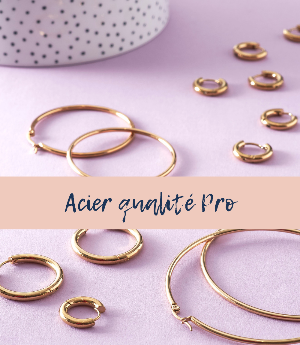


Jewelry supply maintenance
Properly caring for your jewelry helps preserve its shine, color, and finish for longer. Whether it is made of stainless steel, gold-colored or silver-colored materials, pearls, or natural stones, a few simple steps are generally enough to limit wear and oxidation.
Here are our tips for cleaning, protecting, and storing your costume jewelry and DIY creations.
Why can jewelry tarnish or oxidize?
Over time, certain metals and finishes may change when exposed to air, moisture, perspiration, cosmetics, or chemicals.
A tarnished piece of jewelry may lose some of its shine, change color slightly, or develop darker areas.
This change depends in particular on:
- the jewelry's material;
- its surface treatment;
- how often it is worn;
- contact with water, perspiration, or cosmetics;
- how it is stored.
Proper care helps slow down these processes.
How should you clean your jewelry every day?
For everyday care, simply start by wiping your jewelry with a soft, dry cloth after wearing it.
This helps remove some traces of perspiration, dust, cream, or perfume.
For many durable materials, occasional cleaning with a little warm soapy water can also be used. Rinse, then dry the jewelry thoroughly with a soft cloth.
Avoid abrasive products, scouring sponges, and household cleaners, which can damage surface treatments.
How should stainless steel jewelry be cared for?
Stainless steel is popular in DIY jewelry for its durability and ease of care.
Clean your jewelry with a soft cloth to restore its shine. If necessary, use warm soapy water, then rinse and dry it thoroughly.
Although stainless steel resists moisture well, regular care helps remove buildup and preserve its appearance.
How should gold-colored jewelry be cared for?
Gold-colored jewelry may feature different types of finishes: gilding, plating, ion deposition, or PVD, depending on the product.
To preserve their finish:
- avoid prolonged contact with perfumes, creams, and household products whenever possible;
- remove jewelry before swimming, exercising, or prolonged exposure to water;
- clean them with a soft cloth without abrasive products;
- store them separately to limit friction.
The durability of a gold-colored finish varies depending on its type, thickness, and conditions of use.
How should you care for silver-colored or rhodium-plated jewelry?
Silver-colored finishes can tarnish over time.
For routine care, use a soft, dry cloth. If the product allows it, you can gently clean it with warm, soapy water before drying it thoroughly.
A rhodium-plated piece of jewelry has a thin layer of rhodium designed primarily to protect its surface and give it a glossy finish.
Avoid abrasive products or excessive friction that could damage this surface layer.
How should you care for pearls and natural stones?
Pearls, natural stones, mother-of-pearl, and shells generally require more care than metals.
In particular, avoid:
- chemical products and harsh cleaners;
- perfume applied directly to pearls;
- prolonged baths;
- friction with abrasive materials.
After use, a soft, slightly damp cloth followed by gentle drying is generally sufficient.
Natural variations in color, transparency, or texture are part of the characteristics specific to these materials.
Water, perfume, and swimming pools: what should you avoid?
To keep your jewelry looking its best for longer, follow one simple rule:
jewelry is the last thing you put on in the morning and the first thing you take off at night.
Wait until your perfume, cream, or cosmetic products are dry before putting on your jewelry.
Preferably remove them before:
- showering or bathing;
- the pool or the sea;
- sports;
- cleaning and washing dishes;
- gardening;
- using chemical products;
- going to bed.
Chlorine, salt, perspiration, and certain cosmetic products can accelerate the deterioration of some finishes.
How should you store your jewelry to prevent it from getting damaged?
Storage also plays an important role.
Ideally, store your jewelry:
- in a dry place;
- away from direct sunlight;
- separately from one another;
- in individual pouches or the compartments of a jewelry box.
Avoid leaving several chains or metal jewelry in permanent contact with one another: friction can cause scratches and accelerate wear of the finishes.
What should you do if a piece of jewelry causes a skin reaction?
Some people may be sensitive or allergic to certain materials, particularly nickel or other metals used in jewelry. Nickel is also subject to European restrictions for items intended to remain in prolonged contact with the skin.
If a piece of jewelry causes redness, itching, or irritation, remove it and avoid wearing it again until the cause of the reaction has been identified. Avoiding the allergen is an important measure in cases of contact eczema.
If you experience a significant, persistent, or recurring reaction, seek advice from a healthcare professional.
10 habits to make your jewelry last longer
- Put your jewelry on after applying perfume and cosmetics.
- Remove your jewelry before showering or going swimming in a pool or the sea.
- Avoid contact with household and chemical products.
- Remove your jewelry before engaging in sports.
- Do not sleep with your jewelry on if this could deform it or cause it to snag.
- Wipe them regularly with a soft cloth.
- Dry them carefully after any contact with water.
- Store chains separately to prevent knots and friction.
- Store your jewelry in a dry place away from direct sunlight.
- Always adapt cleaning to the jewelry’s material and finish.
How should you care for your jewelry depending on its material?
There is no single method suitable for all jewelry.
Stainless steel, gold-plated jewelry, silver-plated jewelry, natural stones, pearls, and mother-of-pearl do not all react in the same way to water, cleaning products, or friction.
Before cleaning a piece of jewelry or a DIY creation, always check the material and finish of the components used.


